
Travel guide · Updated July 29, 2026
How to travel with a firearm.
A planning-first checklist for researching a road trip or flight in the United States. Rules can change by jurisdiction, airport, airline, firearm, permit, and itinerary, so verify every part of the trip before departure.
Informational only, not legal advice. Always verify current law and policy with official sources. Consult a qualified attorney for legal guidance.
Open the Travel Copilot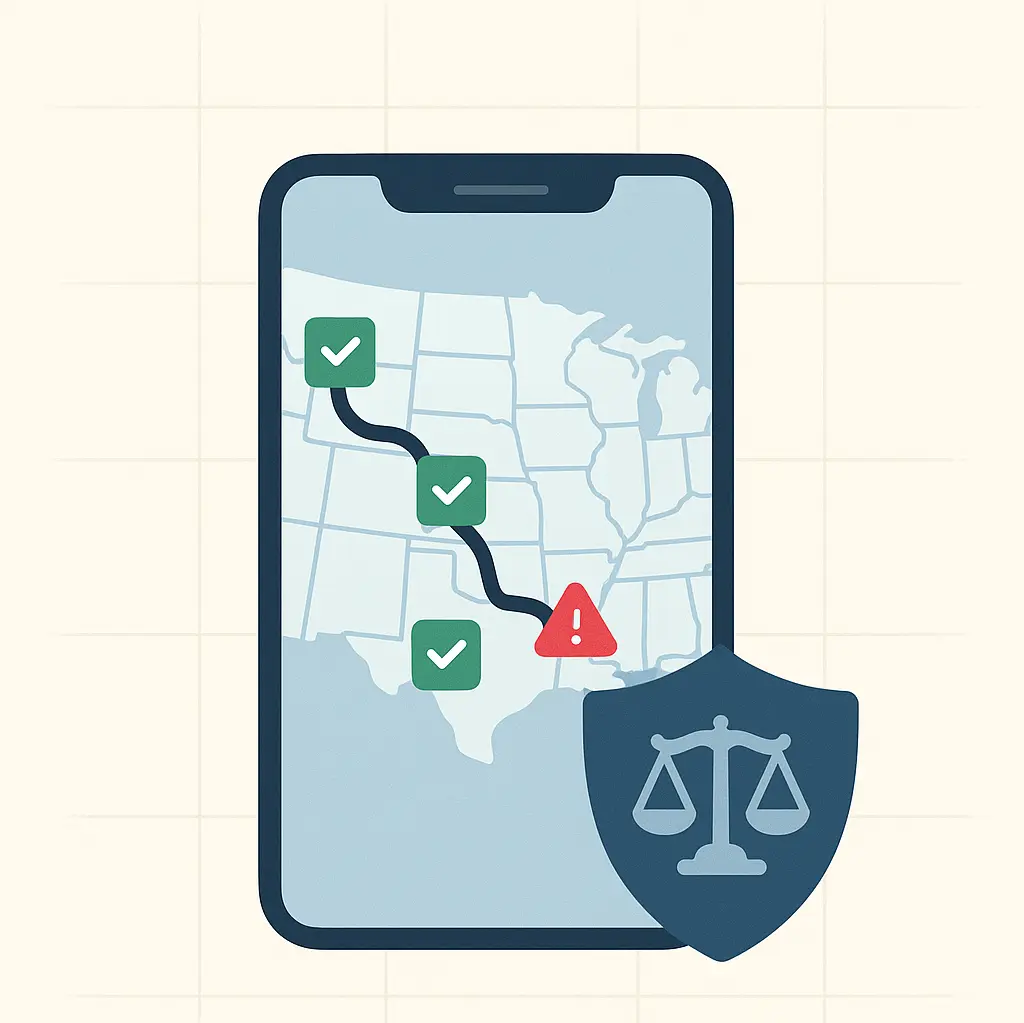
Before packing
Research the complete itinerary, not only the destination
Map every state and jurisdiction where you may possess or access the firearm, including overnight stops and unplanned alternatives. Research possession, vehicle transport, carry, magazine, ammunition, storage, duty-to-inform, and restricted-location rules using current official sources. Permit reciprocity should be checked by permit type and residency, not assumed from a general map.
Federal interstate transport protections are conditional and fact-specific. They should not be treated as a substitute for checking state and local law, especially when a trip includes stops, lodging, or a destination where possession may be restricted.
Road-trip research checklist
Step 1
Trace the route
List every state, planned stop, overnight stay, and alternate route.
Step 2
Check possession
Confirm that each traveler and firearm may lawfully be present in each jurisdiction.
Step 3
Review transport
Verify current vehicle storage, accessibility, locking, and ammunition requirements.
Step 4
Review carry rules
Check permit recognition, carry method, prohibited places, and duty-to-inform rules.
Step 5
Plan secure stops
Decide how the firearm will remain secured during fuel, meals, lodging, and emergencies.
Step 6
Recheck before leaving
Laws and agency guidance change; repeat the research close to departure.
Flying with a firearm: confirm three layers of rules
Airline travel requires more than checking a single page. Review current TSA requirements, the operating airline's firearm and ammunition policy, and the laws at the origin, destination, and any location where you could take possession of checked baggage.
TSA
Review current declaration, checked-baggage, unloaded-firearm, lock, container, and ammunition guidance.
Airline
Check quantity, weight, packaging, case, lock, counter, and check-in timing requirements.
Jurisdictions
Research possession and transport law wherever baggage may be returned to you.
Prepare the records you may need
Keep an accurate private inventory of the firearm, serial number, photos, accessories, and relevant purchase or service records. Before traveling, decide which records have a practical purpose on the trip and how to protect them. Inventory documents identify property; they are not permits and do not authorize possession, carry, or transport.
Save official source links, airline policy, reservation details, and your packing checklist for offline access. If plans change, research the new route before proceeding whenever possible.
Keep the plan together
Build a route-specific research pack.
ArmoryAtlas Travel Copilot helps you organize route checkpoints, state references, reciprocity research, offline packs, and trip-ready inventory reports in one workflow.
Traveling with a firearm FAQ
Can you fly with a firearm in the United States?
TSA permits unloaded firearms in checked baggage when they are declared and secured in a locked, hard-sided container, subject to current TSA, airline, airport, and applicable legal requirements. Firearms are not permitted in carry-on baggage. Verify the current rules directly with TSA and your airline before every trip.
Can I drive across state lines with a firearm?
Interstate travel can involve federal, state, local, and tribal requirements. Federal law may provide limited transport protection when its conditions are satisfied, but it does not replace destination or stopover research. Check every jurisdiction on the route and consult qualified legal counsel when needed.
Should I bring firearm ownership records when traveling?
A personal inventory, photos, receipts, and serial-number record can help you identify your property, but those documents do not create legal authority to possess, carry, or transport a firearm. Keep sensitive records protected and bring only what serves a clear purpose.
Do concealed carry permits work in every state?
No. Recognition varies by state, permit type, residency, age, and current law. Review official state sources for each jurisdiction before relying on reciprocity information.